
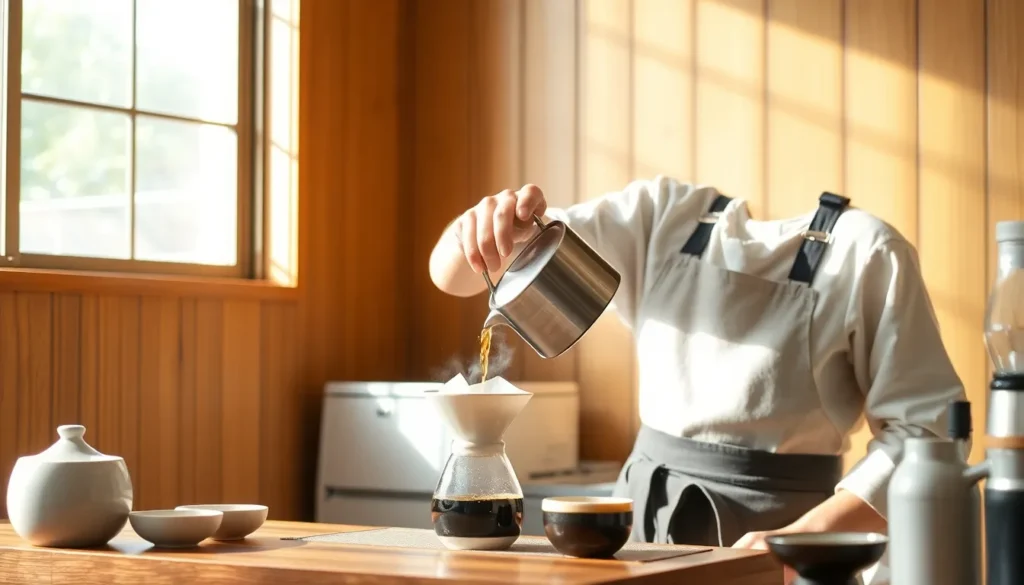
In a world where coffee is often just a morning ritual, Japan takes the brew to an art form. Imagine sipping a meticulously crafted cup of coffee while the barista performs a delicate dance, pouring hot water with the precision of a ninja. Japanese coffee culture isn’t just about caffeine; it’s a celebration of craftsmanship, tradition, and a sprinkle of quirky charm that keeps coffee lovers coming back for more.
From the serene kiss of a pour-over to the whimsical world of Japanese iced coffee, this culture invites everyone to slow down and savor each sip. Whether it’s a cozy café tucked away in a bustling city or a trendy spot with a hipster vibe, Japan’s coffee scene is a delightful blend of innovation and tradition. Dive into this aromatic journey and discover why Japan is brewing up more than just your average cup of joe.
Table of Contents
ToggleOverview Of Japanese Coffee Culture
Japanese coffee culture stands out for its meticulous attention to detail and artistry. Coffee preparation transcends mere routine, becoming a ritual that showcases skill. Baristas employ precise pour-over techniques, ensuring each cup delivers a unique flavor experience. They demonstrate patience in every step, from grinding beans to the final pour, captivating coffee enthusiasts.
The diversity within Japanese coffee shops adds depth to the culture. Specialty cafes, offering single-origin beans, invite patrons to explore distinct flavor profiles. In contrast, kissaten, traditional coffee shops, blend old-world charm with rich coffee traditions, emphasizing a slower, more contemplative consumption.
Japan’s innovative iced coffee styles reflect the culture’s forward-thinking spirit. Cold brew methods, like flash brewing, highlight distinct notes without compromising quality. Seasonal variations, such as incorporating Japanese fruits, enhance the beverage’s complexity.
Japan’s coffee society balances tradition with modern techniques, appealing to a wide audience. This dual approach fosters a space where both casual drinkers and dedicated aficionados can thrive. Coffee festivals celebrate this diversity, showcasing regional roasters and brewing methods.
Exploring Japanese coffee culture offers an inviting experience filled with sensory delights. Each sip tells a story of geography, artistry, and technique. An appreciation for craftsmanship enhances not only the coffee but also the social atmosphere surrounding it.
History Of Coffee In Japan
Japan’s journey with coffee spans centuries, marked by unique adaptations and cultural significance. The introduction of coffee to Japan started in the 17th century, largely influenced by Dutch traders.
Early Introductions
Coffee first appeared in Nagasaki in the early 1600s. The Dutch East India Company played a crucial role in bringing coffee beans to Japan. By the late 1800s, coffee was gaining traction among the Japanese elite. The establishment of the first kissaten in 1888 set the stage for coffee’s cultural integration. These traditional coffee houses offered a blend of Western coffee styles and Japanese aesthetics, allowing patrons to enjoy coffee in a serene environment.
Modern Developments
The post-war era sparked significant changes in Japan’s coffee culture. American influence prompted the rise of coffee chains in the 1960s, expanding coffee accessibility. Specialty coffee shops emerged in the 1990s, emphasizing quality and unique brewing methods. Techniques like pour-over and siphon brewing gained popularity among baristas. Japan’s coffee festivals began showcasing regional roasters, celebrating local flavors. The culture now merges tradition with innovation, embodying a diverse landscape for coffee enthusiasts across the nation.
Brewing Techniques
Japanese coffee culture showcases a variety of brewing techniques, each emphasizing craftsmanship and precision. Traditional methods highlight meticulous preparation processes while contemporary trends introduce innovative approaches.
Traditional Methods
Pour-over coffee stands out as a hallmark technique in Japan. Baristas use a ceramic dripper, ensuring even extraction and rich flavors. Unique to this method, the ritual involves precise water temperature and timing. The French press also has its place, offering a deeper, full-bodied taste. Traditional kissaten cafés often feature single-origin beans brewed to perfection, inviting patrons to appreciate each sip slowly. A key characteristic of Japanese brewing is the focus on clarity and depth, making each cup a memorable experience.
Contemporary Trends
Contemporary coffee culture in Japan embraces creativity and innovation. Cold brew styles, especially flash brewing, have gained popularity, yielding smooth and refreshing beverages. Seasonal iced coffee variations showcase local ingredients, including Japanese fruits like yuzu and sakura. Additionally, siphon brewing captivates coffee enthusiasts with its theatrical presentation and complex flavors. Specialty coffee shops frequently experiment with aroma and taste, inviting the community to explore new horizons. Overall, these trends reflect the dynamism of Japan’s coffee scene, merging tradition with modern flair.
Coffee Shops And Cafés
Japan’s coffee shops and cafés showcase a variety of unique experiences for coffee lovers. Establishments continue to embody the meticulous craftsmanship synonymous with Japanese coffee culture.
Types Of Establishments
Kissaten represent traditional Japanese coffee shops emphasizing a serene atmosphere. Specialty cafés focus on high-quality beans, offering an extensive menu of brewing methods. Coffee chains have increased in popularity, providing a fast and convenient option. Mobile cafés add an innovative twist, allowing baristas to serve coffee in different locations. Each type contributes to a diverse coffee landscape, catering to casual drinkers and dedicated enthusiasts alike.
Unique Ambiances
Cafés often feature distinctive designs, blending modern aesthetics with traditional touches. Soft lighting, wooden furniture, and green plants create a welcoming environment. Some establishments host art exhibitions or live music performances, enhancing the overall experience. Guests can enjoy a moment of tranquility, absorbing the calming atmosphere. Each café cultivates a different vibe, inviting patrons to linger and enjoy their coffee in a comfortable setting.
Coffee Beans And Roasting
Japanese coffee culture emphasizes selecting high-quality beans and innovative roasting techniques. Specialty shops often showcase single-origin beans sourced from various regions, including Ethiopia, Colombia, and Brazil. Each variety contributes distinct flavor profiles, appealing to diverse palates.
Popular Varieties
Arabica beans dominate the Japanese market, prized for their smooth flavors and aromatic qualities. Robusta beans, known for their boldness and higher caffeine content, appear in specific blends. Additionally, local roasters experiment with unique hybrids to cater to evolving tastes. Not only are these varieties celebrated in cafés, they also highlight Japan’s commitment to excellence in coffee production.
Roasting Practices
Roasting techniques vary among Japanese baristas, with many preferring light to medium roasts that enhance beans’ natural flavors. Artisanal roasting methods often involve precise temperature control, ensuring consistency and quality. Innovative approaches such as air roasting have gained popularity, allowing for distinctive flavor profiles. Traditional roasting shops maintain a focus on craftsmanship, showcasing expertise in producing exceptional coffee. Each roasting method adds depth to Japan’s coffee culture, further enriching the experience for enthusiasts and casual drinkers alike.
Influence Of Japanese Aesthetics
Japanese aesthetics significantly shape the coffee experience, promoting a minimalist and refined approach. Attention to detail defines the presentation of coffee, where each cup represents meticulous craftsmanship. The principle of “wabi-sabi,” which embraces the beauty of imperfection, influences both the design and the preparation of coffee.
Aesthetic elements manifest in various aspects of Japanese coffee culture, from the choice of ceramics to the layout of coffee shops. Baristas select vessels that enhance the sensory experience, often opting for handmade cups that convey individuality. Visually pleasing arrangements of coffee ingredients contribute to a harmonious atmosphere, inviting patrons to engage with their drinks.
Environment plays a crucial role in coffee enjoyment. Many cafés incorporate nature, with tranquil gardens or wood accents creating a serene space for contemplation. Spaces designed with warmth and simplicity often encourage customers to savor their coffee rhythmically, combining taste and aesthetics seamlessly.
Filtration methods highlight aesthetic values, with pour-over techniques showcasing the individual characteristics of each coffee bean. The slow, deliberate preparation underscores the artistry involved, turning the brewing process into a performance. Innovatively crafted iced coffee also captivates, with seasonal presentations that reflect Japan’s commitment to beauty in every cup.
High-quality beans elevate the coffee experience further. Sourcing from renowned regions emphasizes not only flavor but also the visual appeal of beans and their brewing methods. Baristas often participate in competitions that prioritize both taste and artistic expression, driving the evolution of coffee aesthetics within Japan.
Japanese coffee culture thus stands as a testament to the interplay between aesthetics and flavor, cultivating an environment where coffee is not just a beverage but an experience deeply rooted in tradition and creativity.
Japan’s coffee culture is a captivating blend of artistry and tradition that invites exploration. Each cup tells a story through meticulous preparation and innovative techniques that elevate coffee to an experience. The diverse range of coffee shops showcases the country’s commitment to quality and creativity, appealing to both casual drinkers and dedicated aficionados.
As coffee lovers delve into this unique culture, they find not just a beverage but a ritual that celebrates the beauty of craftsmanship. The harmonious balance of modernity and tradition ensures that Japan’s coffee scene continues to thrive, offering something special for everyone.